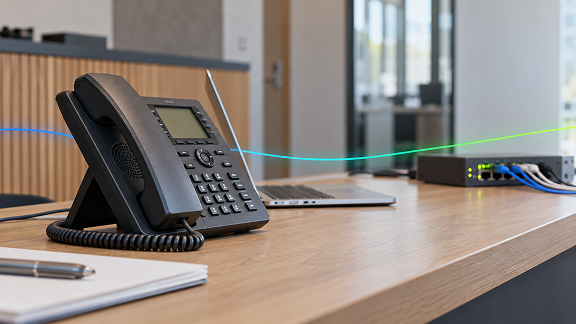
Public switched telephone networks are being switched off across the world, but not at the same pace and nowhere overnight. Some countries have completed the national transition, and some have moved its subscribers over. Some even stopped selling analog lines and are closing the installed base in stages, region by region, while some are running a national migration program whose completion date has already been revised. In many other markets — and in the more remote parts of markets already committed to switch-off — copper is still carrying live traffic today.
The direction of travel is settled: copper-based voice is being retired in favor of VoIP and cloud-based communications. The timetable is not.
For most service providers and enterprises, the realistic outlook is a long overlap, during which SIP trunks, ISDN accesses and analog lines coexist across the estate — sometimes within the same building.
Migrating off ISDN raises three questions most enterprises and operators face early on:
No, on both counts. The built-in session controller is PBX-agnostic and interoperates with any major PBX brand on the market, so your existing PBX stays exactly as it is. And unlike a pure voice gateway, which only handles the first migration step and gets replaced the moment phones or the PBX move to IP, Ekinops router carries the same interfaces and adds the enterprise session border controller by license, not new hardware, so the box you install today still serves you when the rest of the migration happens.
Dedicated FXS ports keep them connected as before. Fax calls are detected automatically and switched to a loss-free transmission mode, and line voltage is maintained for alarms and elevators, so these devices keep working without any special setup.
The built-in session controller provides local survivability. If the main access link goes down, internal calls on site keep working, and outgoing calls, including emergency numbers, reroute automatically over a backup mobile connection or a remaining physical line.
The connection to the operator can be encrypted, with TLS securing call signaling and SRTP securing the voice media itself. The session controller also hides your internal network structure from the outside. Built-in rate limiting and IP filtering block flooding attempts, and fraudulent calls to premium-rate international numbers are detected and stopped automatically.
Yes. The built-in session controller is certified for Microsoft Teams Direct Routing, so you can connect your existing PBX and Microsoft Teams telephony through the same SIP access at the same time, without adding a separate gateway.
The same all-in-one platform lets you replace the TDM subscription revenue you’re losing with a new converged voice-and-data offer, without stacking a separate voice gateway on top of the customer router. That keeps your cost per site down and your margin intact as you migrate customers off ISDN.